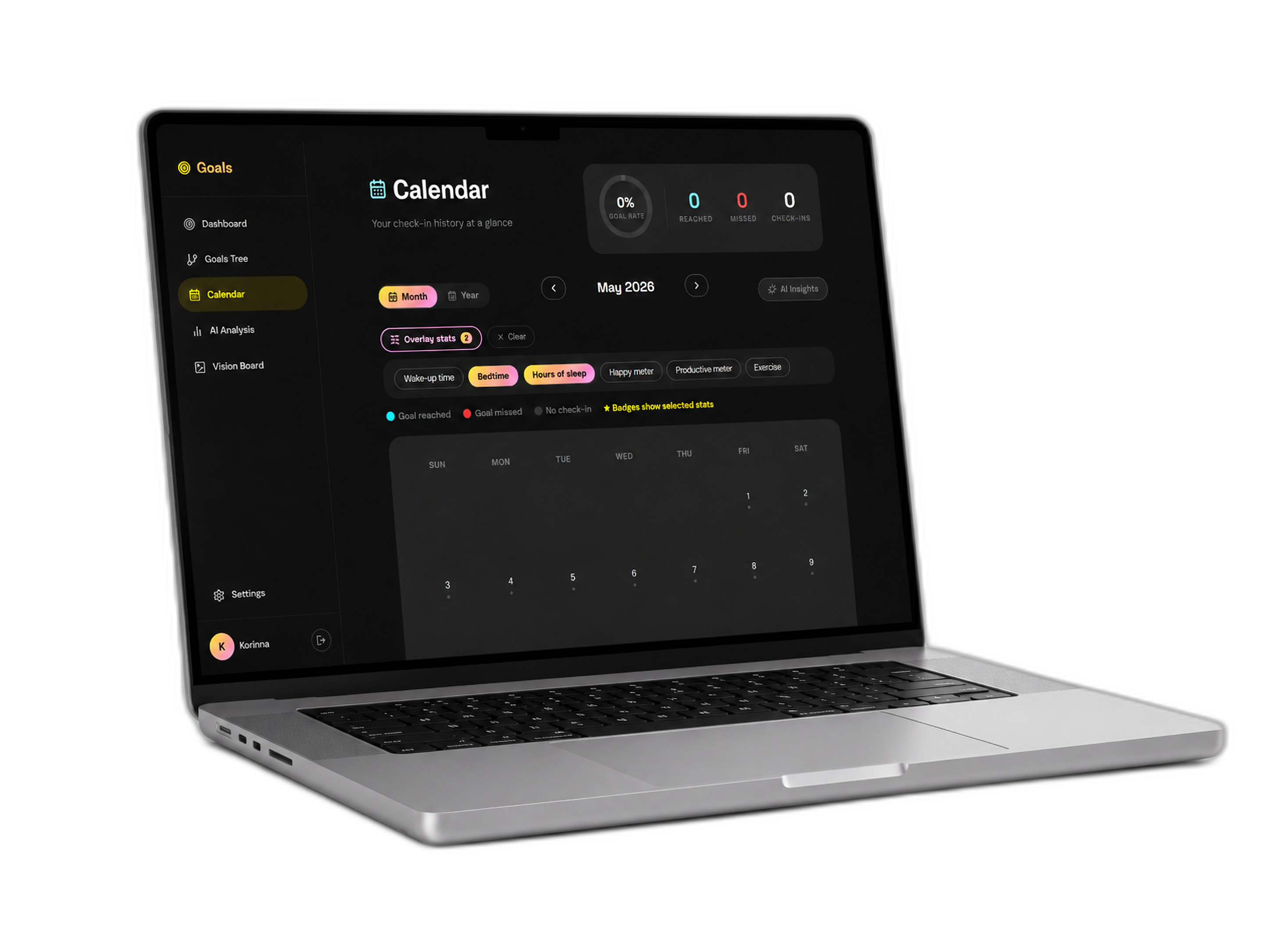
Goals is a habit tracker that links everyday actions to big life goals, with an AI assistant that spots patterns in your progress. In most apps, goals are just a to-do list: you tick boxes, but quickly forget why.
Brief and goal
Link daily actions to big life goals, instead of a simple to-do list where you quickly forget why you tick the boxes.
Role and responsibilities
Personal project: UX/UI design, full-stack development and AI integration.
Credits
Personal project. The UX/UI design, the full-stack development and the AI integration are my work.
Use of AI
I used Google Antigravity to program and debug the app, the Gemini API to analyze daily check-ins in the app, and Claude Code to add this sheet to the portfolio. My personal contribution includes the UX/UI design, the data structure, the system prompt and the full-stack development.
Production steps
-
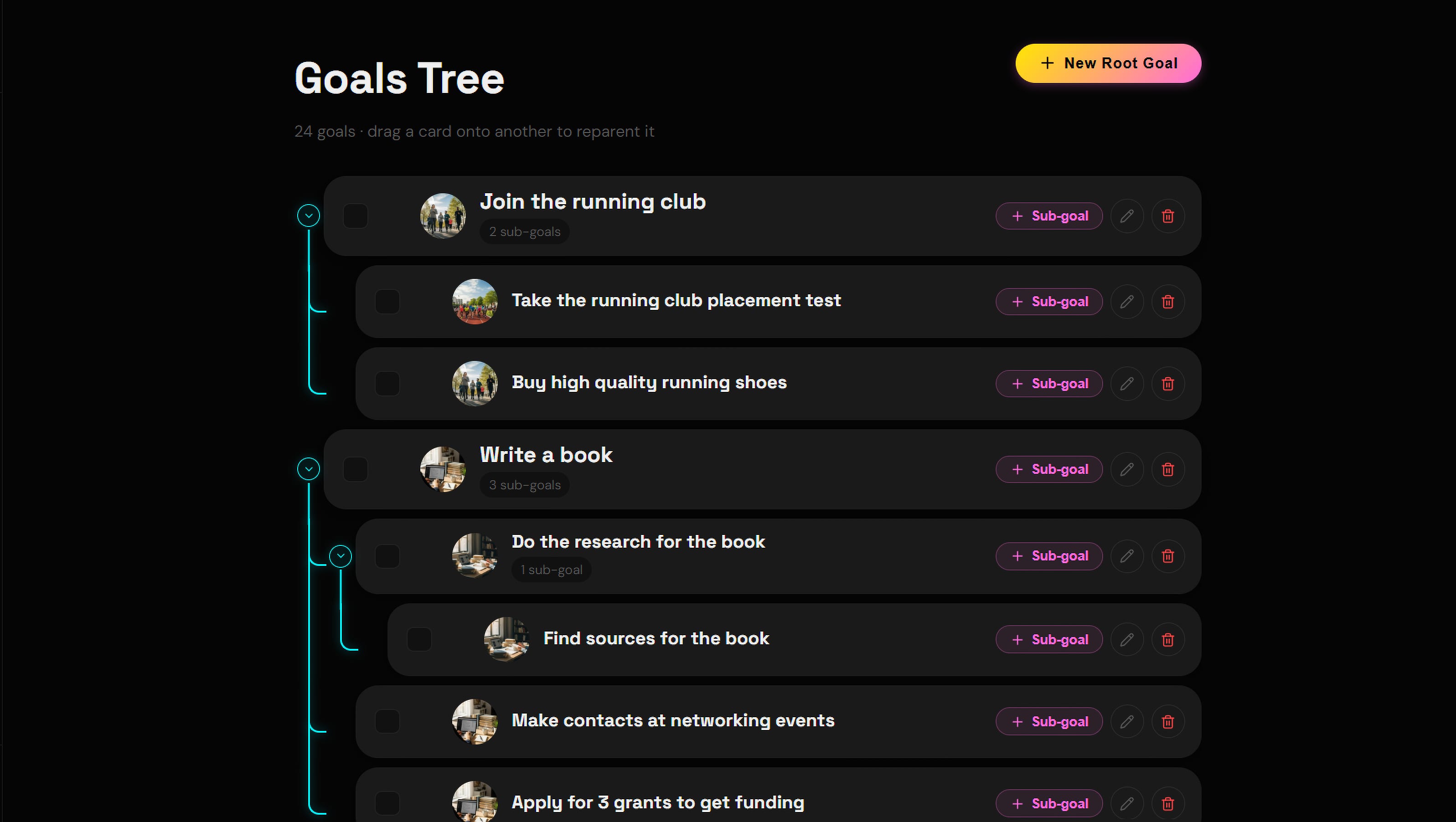
Step 1: UX/UI: a hierarchy of goals
Instead of a list, the interface has you link each small habit to a parent goal. I chose a clean, distraction-free dark mode that makes the hierarchy stand out.
-
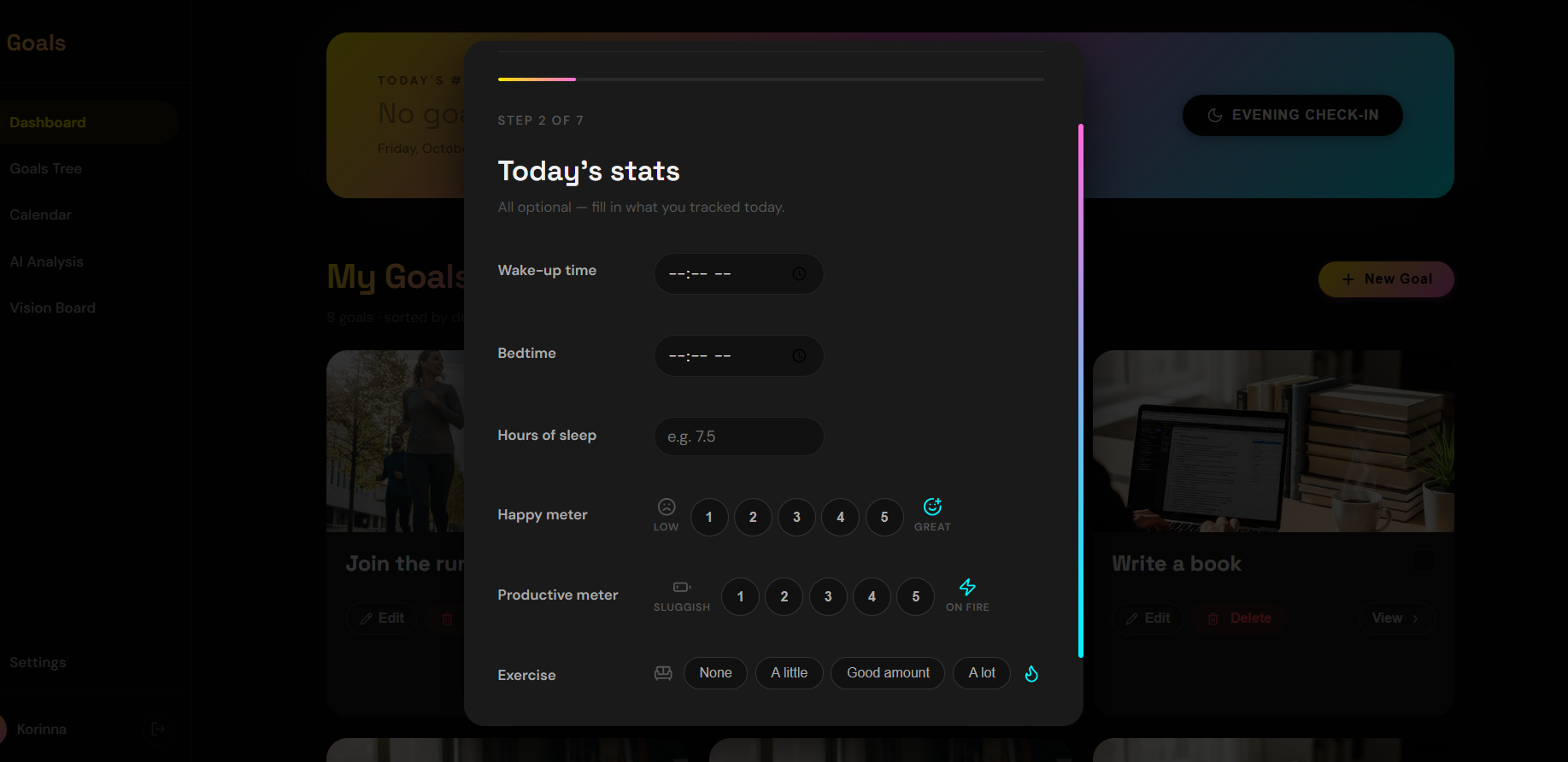
Step 2: Development: flexible daily check-ins
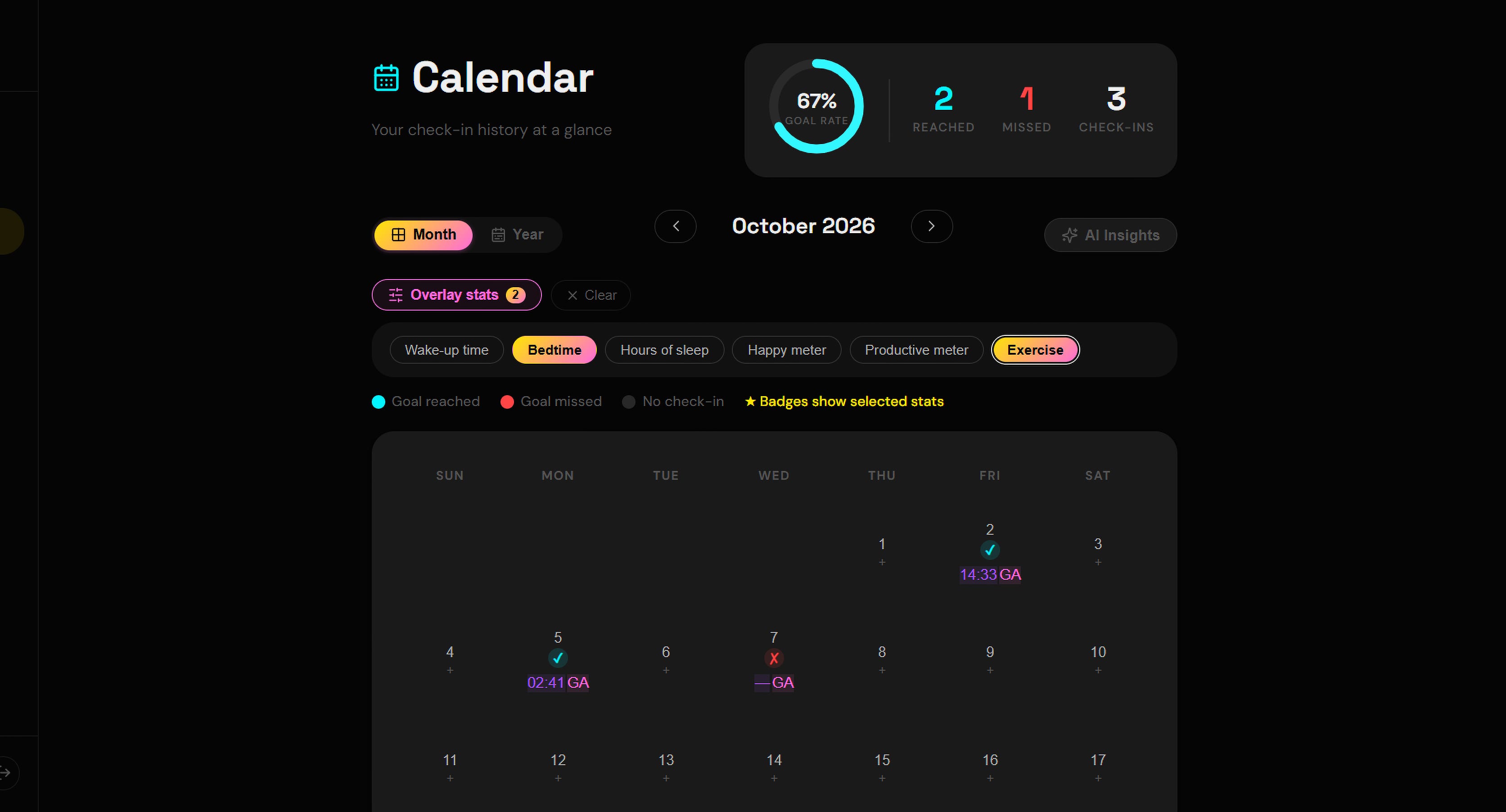
The app offers an evening reflection based on personalized questions. Over time, you get rich, structured data, without it feeling like a chore.
-
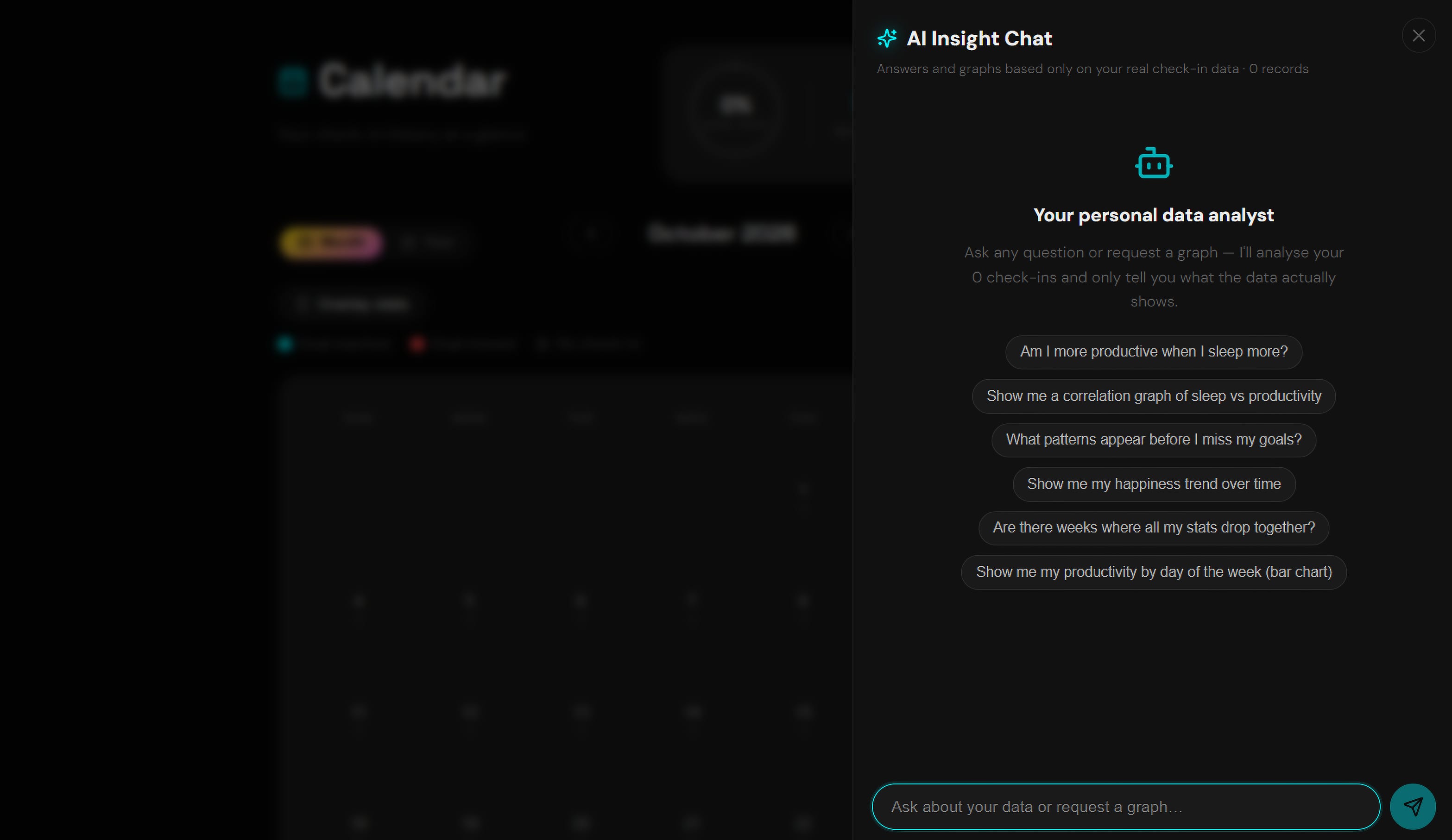
Step 3: AI system: contextual analysis
The check-in history is sent securely to a large language model, with a specialized prompt. It looks for correlations, for example « the days you sleep 8 hours are correlated with your coding habit », and turns them into insights you can actually use.
-
Step 4: Structured data for the AI
For the analysis to give concrete insights rather than vague advice, check-ins combine free text with binary and numerical entries; the system prompt then enforces the « Observation → Correlation → Action » format.
-
Step 5: Deployment
The front end is built with Vite and the app runs in production on Google Cloud Run; authentication and the database are handled by Firebase.
Technologies
-
Interface built with React; authentication and database handled by Firebase.
-
Analyzes daily check-ins and returns structured observations in the « Observation → Correlation → Action » format.
-
Hosting of the app in production.
-
AI-assisted development environment used to program and debug the app.
-
Front-end build tool.
Challenges
At first, the AI gave vague, horoscope-like advice, because the check-in data was not structured enough.
Solutions
I restructured the database to require binary and numerical entries on top of text, and refined the system prompt to enforce a strict « Observation → Correlation → Action » format.
Final result
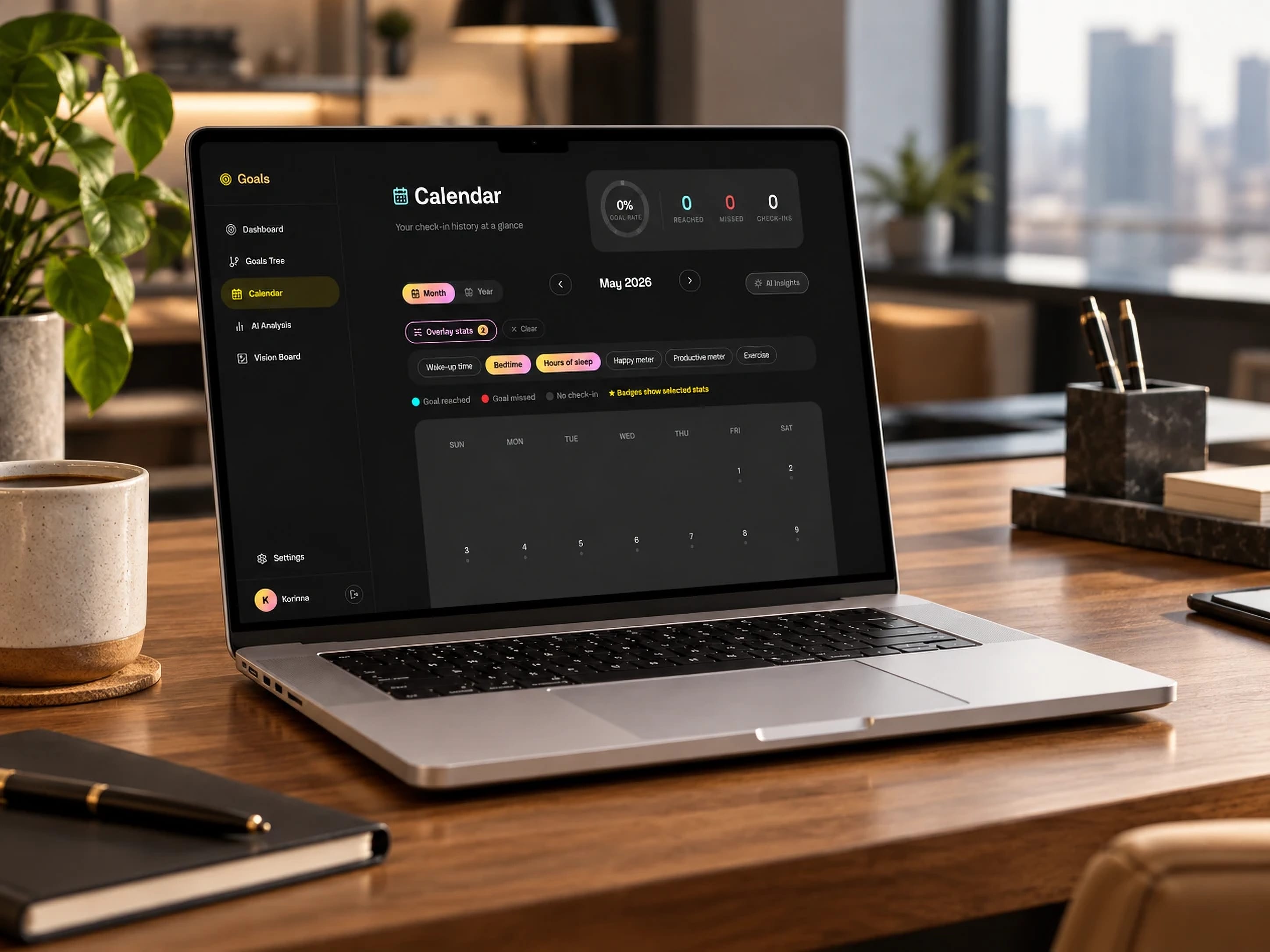
A web app online: hierarchical goals, daily check-ins and trend analysis through the Gemini API, built with React and Firebase.